
Complaints Chronicle
Discount and retail brokerage firms have run advertisements suggesting that their customers could trade their way to buying their own private island or massive riches, but the reality is that few active traders avoid losing their nest egg, much less earn above-market gains. But now these traders have new complaints, which suggest that it’s not just safer, but also more convenient to rely on a professional.
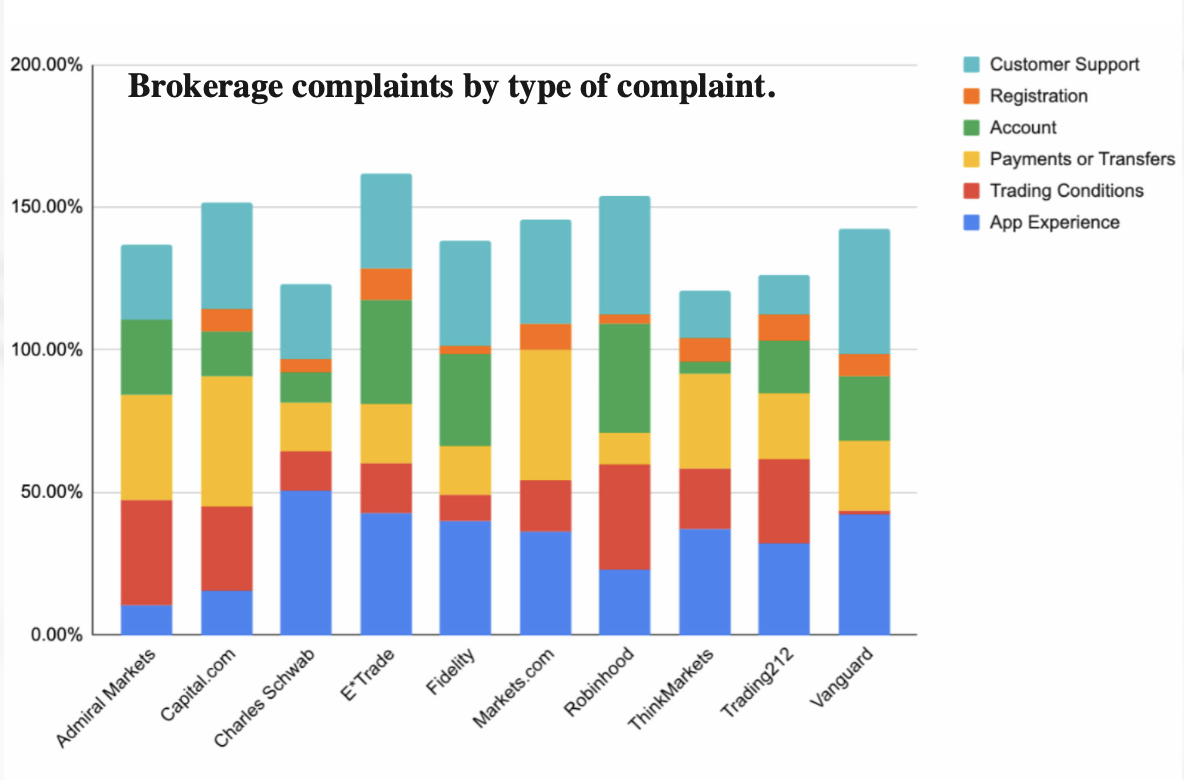
An organization called Broker Listings has collected customer reviews of a variety of sites, including traders’ direct experience with Robinhood, Charles Schwab, Trading 212, Fidelity, Vanguard, Capital.com, E*Trade, ThinkMarkets, Markets.com and Admiral Markets. After reading and recording every review, the researchers compiled a dataset of the various complaints that traders lodged online. The top ten complaints included the broker’s trading app (slow, glitches, low general usability); the customer’s experience with the trading conditions (losing money because trades didn’t go through or were limited); payments or transfers (problems getting money in and out of the brokerage or glitches in transferring funds between accounts); poor customer support; limited account access; login issues or unexpected account closure; and registration delays because the broker required what the user believed to be intrusive verification.
By far the most complaints centered around the user experience. Users complained that the trading app updates would be accompanied by an array of bugs that led to painfully slow logins and glitchy charts. Short-term traders complained that symbols were being delayed by minutes, stymying their efforts to jump in and out of the markets. Poor design was also mentioned more than a few times.
But perhaps the most interesting finding in the survey came when the analysts looked at how the direct-to-consumer brokerage platforms responded to these complaints. They found that Trading201 was very responsive, actively engaging on issues like technical glitches. Fidelity also engaged when problems were reported. At the other end of the spectrum, Charles Schwab did not respond to any of the online complaints during the survey period. “Perhaps it feels it’s too big to fail or that a few bad reviews won’t impact its bottom line,” the reviewers speculated; “but it could do more to quell customer complaints.”
Of course, there’s nothing wrong with investing on your own—even if it’s a bit far-fetched that rapid-fire trading will earn enough to buy your private island. Perhaps the lesson is that prudent investors will likely not interact with these clunky apps on a daily, weekly, monthly or even yearly basis. That, and the possibility that personal service can save some of the aggravation of managing your investments.